
11 Aug How Physical Fitness Affects Mental Health
For years, exercise got sold to us as a way to just look better. Flatter stomach, bigger arms, a number on the scale that finally moves in the right direction. Makes sense, but it can really create a bad relationship with exercise and health. What almost nobody led with, until recently, is that movement might be one of the most effective tools we have for protecting the mind, not just the body.
I’ve coached people through injury, burnout, and seasons where their bodies were the least of their problems. What I’ve watched, over and over, is that the clients who start moving consistently don’t just get stronger. They get steadier. That’s not just a coaching observation anymore. It’s backed by some of the most rigorous research to come out in years.
The Science Is Now Undeniable
In February 2026, researchers published a massive umbrella review in the British Journal of Sports Medicine that pulled together decades of data on exercise, depression, and anxiety. This wasn’t one small study. It was a synthesis of dozens of existing meta-analyses, built specifically to answer the question researchers still hadn’t fully settled: does exercise actually work as a treatment for depression and anxiety, and if so, what kind, how much, and for whom.
The scale of it is worth sitting with. For depression alone, the review incorporated 57 pooled data analyses covering 800 individual studies and 57,930 participants between the ages of 10 and 90. For anxiety, it included 24 pooled data analyses representing 258 individual studies and 19,368 participants aged 18 to 67.
The conclusion was blunt. Exercise effectively reduced depression and anxiety symptoms across all age groups, comparable with, or exceeding, traditional pharmacological or psychological interventions. Read that again. Not “helps a little.” Comparable to, or better than, medication and therapy, across every age group studied.
A few specifics stood out:
- Depression and anxiety impact as many as 1 in 4 people globally, with young people and women experiencing the highest rates.
- The strongest improvements were observed among young adults aged 18 to 30 and women who had recently given birth.
- For depression, aerobic activity, especially when delivered in supervised or group settings, produced the largest benefits.
- For anxiety, shorter programs lasting up to 8 weeks and involving lower intensity activity may be most helpful.
- Group and supervised formats gave the most substantial benefits, underscoring the importance of social factors in mental health interventions.
That last point matters more than people realize. It’s not just about moving your body. It’s about who you’re moving with.
Why Movement Changes How the Brain Handles Stress
Mental health isn’t only about mood in the moment. A lot of it comes down to how your body regulates stress over time, and that’s where cortisol comes in.
Cortisol is your body’s primary stress hormone. In short bursts, it’s useful. Left chronically elevated, it wears down nearly every system in the body, mood included. A year-long clinical trial published in the Journal of Sport and Health Science found that participants in an aerobic exercise group showed a clear reduction in long-term cortisol levels, a hormone that plays a central role in regulating metabolism, immune function, sleep, memory, and mood.
This isn’t limited to hard cardio sessions either. A systematic review and network meta-analysis found that exercise, particularly mind-body practices such as yoga and qigong, can reduce cortisol levels in individuals with psychological distress, with optimal efficacy observed at approximately 530 MET-minutes per week, roughly the equivalent of a little over an hour of moderate activity most days. In plain terms: you don’t need to punish yourself in the gym to get the stress-regulating benefit. Consistency and the right dose matter more than intensity.
The Sleep Connection Nobody Talks About Enough
Poor sleep and poor mental health feed each other in a loop that’s hard to break from either side. Exercise turns out to be one of the few tools that interrupts that loop directly.
Research on exercise and sleep quality has found that brief bouts of exercise lasting between 10 and 30 minutes stimulate the secretion of hormones, including endorphins, which can enhance the quality of sleep by increasing the amount of deep and rapid eye movement sleep. That’s a short window. A brisk walk, a light strength session, even a bike ride around the neighborhood can qualify.
There’s a ceiling, though. The same research found that as exercise duration extends beyond 90 minutes, it may adversely affect psychological and physical health, leading to excessive arousal at night, which can impact sleep quality. More isn’t always better. This is a place where I tell clients to trust the floor, not chase the ceiling. Twenty to thirty minutes, done consistently, does more for your sleep and your mind than an occasional two-hour grind that leaves you wired at midnight.
Beyond Mood: Fitness Rebuilds Your Sense of Self
Here’s the part of the research that lines up most closely with what I’ve seen in my own coaching career, and it’s not really about mood at all. It’s about self-esteem.
A 2026 meta-analysis of exercise interventions in college students found a large significant positive effect of exercise on overall physical self-esteem, with meaningful improvements across physical self-worth, sport competence, physical condition, and physical attractiveness. This isn’t vanity. Physical self-esteem is tied to how safe and capable someone feels moving through the world, and that feeling doesn’t stay contained to the gym.
I believe resilience can be trained. Most people were never taught how to live with that in mind. What the research is now confirming is that resilience isn’t just a mindset you adopt. It’s something you can build in your body, one session at a time, and it shows up as steadier mood, better stress tolerance, and a version of yourself that doesn’t fall apart the moment life gets hard.
My Suicide History
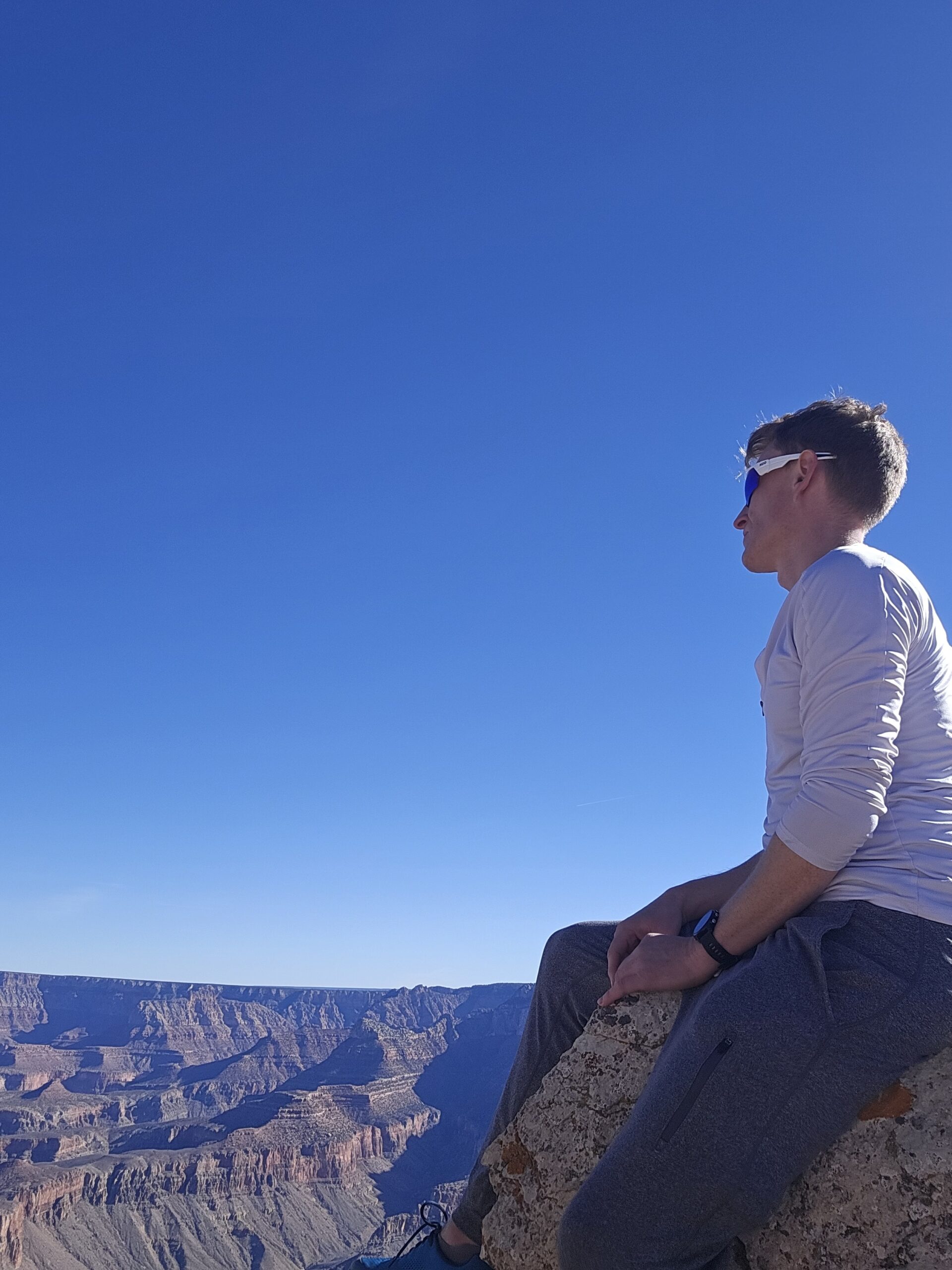
I can safely say that exercise has saved my life. I don’t know how many times I’ve changed my entire day because of just going running, or pushing through some issues internally (and externally) that brought me out of a rabbit hole. It’s hard to explain sometimes, but I know the number one reason on this earth and in my life that has saved me is exercise and especially running.
Honestly and no offense to you as the reader, but I don’t know how anyone goes through most of their lives, let alone the entirety of it, without exercising. It’s crazy to me. I don’t always love it and sometimes ironically it’s a burden.
I’ve honestly been really close to giving it all up. When I was younger I couldn’t ever figure it out. Especially when it was so consistent or it was around when life was going pretty well. Then it hit me a few years ago. I have let other people push into my life too much and have way too much power. Plus, I didn’t feel like my life was worth anything. Probably went hand in hand, but either way, not feeling like I have much of a purpose or that I don’t mean much other than to help other people really did a number on me.
All to say, exercise was the one thing that I could always count on, which ironically took my autonomy to do something about it. Which gave me power no matter how hard life was. I always have exercise.
How Much Exercise Do You Actually Need
You don’t need to train like an athlete to get these benefits. The standard guideline from the CDC is that adults need at least 150 minutes of moderate-intensity physical activity a week, such as 30 minutes a day, 5 days a week, along with 2 days of muscle-strengthening activity each week.
That’s the baseline, not an impossible target. I also don’t love the specifics of it personally, but it does give a baseline at least. Here’s how it can realistically break down:
| Goal | What It Looks Like | Weekly Time |
| Mood and stress regulation | Brisk walks, light cardio, cycling or running | 20 to 40 min, most days |
| Better sleep | Short aerobic sessions, avoid workouts over 90 min close to bedtime | 10 to 30 min |
| Anxiety relief | Lower intensity movement, shorter structured programs | Up to 8 weeks, consistent |
| Depression support | Aerobic activity in a group or supervised setting
Also resistance training in any setting |
2 to 3 sessions weekly |
| Long-term resilience | Mix of aerobic and resistance training | 150 min moderate + 2 strength days |
What This Looks Like in Real Life
I stand against fitness built on trends, not truth. So let’s keep this practical.
- Start with the floor, not the ceiling. A 20-minute walk counts. It’s not the consolation prize, it’s the intervention the research actually supports.
- Find a group or a partner when you can. The data is clear that supervised and group formats produce the strongest results for depression specifically.
- Protect your evenings. Save the long, intense sessions for earlier in the day, and keep something lighter in reach for the hours before bed. If you can of course. Work and life don’t always allow for an exact prescription.
- Don’t wait to feel motivated. Mood follows movement more often than movement follows mood. Show up first, and let the feeling catch up.
- Track consistency, not intensity. Two moderate sessions a week, done for months, will outperform one brutal session done occasionally and then abandoned.
If you’re navigating anxiety, depression, or a difficult season right now, this is a sensitive topic worth taking seriously. Movement can help, but it isn’t a substitute for professional support. If you’d like, I can point you toward resources for finding that support.
The Bottom Line
Fitness was never just about how you look. The research now backs up what a lot of us in this field have believed for a long time: consistent movement changes how your brain handles stress, how well you sleep, how you see yourself, and how resilient you are when life gets hard.
I’ve built my whole coaching philosophy around one idea, that showing up again and again is where the real change happens. The research on exercise and mental health says the same thing in a different language. You don’t need a perfect program. You need a consistent one.
Start where you are. Build from there. Your mind will follow your body’s lead.
If you ever need to chat about life being a bitch, shoot me a call.
No Comments