
One of the most common questions I hear is: how long should a workout be? An hour? Two hours? Just 20 minutes? Is a full body workout enough? Are short workouts effective? Do you need at least an hour in the gym to see results?
I think this comes up a lot because of both people’s attempt to justify whatever info they have in their brain relative to what they are willing to do, AND what information is just generally out there. There’s so many programs to “choose” from too. You can AI a program. Download free ones. Watch YouTube videos. Etc, etc.
So, people are trying to process what they want, what they think they can handle or fit into their schedule, and what information & marketing tells them they need to get whatever result they desire. That’s a lot of input and that’s why most people don’t output much. They freeze. Thaw out. Then maybe revisit the topic in the same way later.
We’ve all been here. It’s not easy. The honest answer: the ideal workout length depends on your goals, your fitness level, and how well you recover. But there are principles that apply to almost everyone. Also, don’t forget about the realities of your schedule relative to what we’re about to break down.
So…let’s break it down!
The right workout length depends on your primary focus:
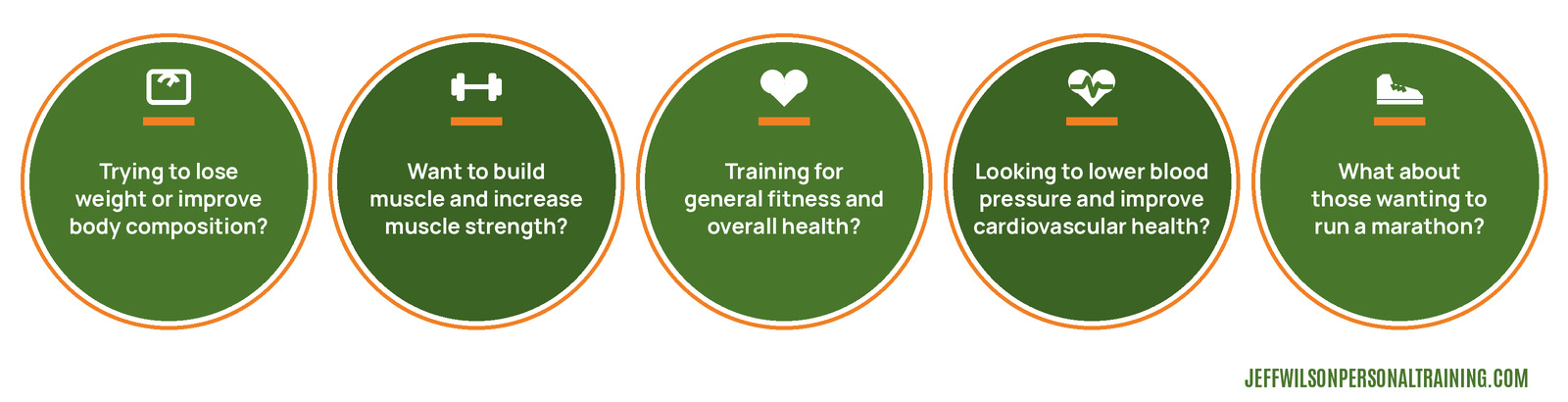
Different fitness goals require different workout durations, but none require living in the gym. Obvious yes, but obvious on how to implement…no.
For general health and longevity, most reputable organizations recommend around 150 minutes of moderate intensity aerobic activity per week, or shorter bouts of vigorous activity. That could look like 30 minutes of moderate intensity exercise five days per week. Or it could be a mix of steady state cardio and HIIT sessions.
Add 2-3 strength training sessions per week targeting all major muscle groups, and you're covering a lot, especially over time. Honestly, if you do a couple gym days covering full body and then a couple cardio sessions, you're good to go. Even 20-30 minutes of each of those, in some situations, can give you the results you need.
You don't even need an hour per workout. Consistent moderate physical activity done week after week is what improves overall health. Just don't skip cardio.
If your goal is strength training, muscle mass, and strength building, the question becomes less about "how long should a workout" last and more about what happens during that time.
A focused weight training session starts with about 2 compound lifts, depending on experience level. Then you can mix in some more exercises to fill in the gaps, like carrying exercises and rotational movements like a Pallof Press. One of my favorite exercises! Here's a short video example.
It also needs proper rest between sets, which is greatly impacted by your goals and experience level. If you're training pure strength, 2-5 minutes could be needed, but 2 is a good starting point. If you're training for endurance, rest could be as little as nothing between exercises, but then a couple minutes between sets. Or maybe 30-60 seconds between sets, in a more "normal" session set-up.
Then there's progressive overload. All programs need this, at least every few weeks. I aim for about 4-6 weeks when starting out with just about any program, but narrow it down to 4 pretty often. And finally, attention to technique. All programs need this too.
A session like this can be incredibly effective in about 60 minutes. As experience grows, or right in the beginning where less time is advised, you can play around with how long you're going. I do some strength sessions in 20-30 minutes and get my entire leg day done. This is still in the strength realm, but I might just focus on 2-4 compound exercises and nothing else. It depends on the week, but I have more leeway since I've been doing this for many years.
You don't build muscle from time spent in the gym. You build muscle from the stimulus added with recovery.
There's a myth that longer is better (that's what she said?!). But here's what matters.
Short workouts are great for busy schedules and HIIT workouts. They also work well for focused upper body or lower body sessions. And they help you maintain consistency, both short and long-term.
If intensity is medium to high and rest periods are structured well, shorter workouts can deliver serious results. It's just not the "trap" you want to get caught in. You don't want to become that person who only does CrossFit, or only goes to those classes 3-5 days per week (high intensity, typically) and never works on mobility or real strength (like 85-95% of your 1 rep max).
People get caught in this trap because they start exercising and learn to just work out, rather than set a goal. Essentially, doing any type of high intensity interval training more than 2 times per week, basically all year, isn't as healthy as certain exercise groups or rationales would like you to think. The point is, HIIT style philosophies usually focus on high intensity and "getting in a workout." They don't really ever stop to think about goals much outside of weight-loss, toning, or "getting in shape."
This is the sweet spot for most people. These sessions can be longer for sure, but unless you're doing several compound exercises and/or working on athletic performance, why go much longer than this? Recovering from injury may fall under longer sessions too, since accessory workload will increase.
A balanced full workout might start with compound lifts like bench press, squats, and pull ups. Then add accessory work such as single arm rows or calf raises. (If you're a runner, calves take precedence over a lot of other exercises, just FYI.)
Some light cardio or mobility belongs in there too. When adding cardio (not the high intensity interval type), sessions may need to be longer. If you're trying to work out 3 days a week but need to smash things together, that's a great example of when that would happen. Finally, build in thoughtful rest time. Go back above and refresh the rest times if needed, for whatever goals you're setting.
This range allows enough volume to stimulate growth without excessive fatigue. Need help setting goals? I do this for a living. Shoot me a call and I can give a pointer or two on setting goals properly. You can book an intro coaching call here.
Long workouts are typically sport-specific or high-volume bodybuilding sessions. They also make sense for advanced trainees with specific programming needs, and for some injury recovery protocols.
For most people, regularly doing long workouts leads to diminishing returns and recovery problems. More time does not equal more progress. And don't stare at your phone all workout, either. Be mindful. Learn about yourself while working out. This should be time for you, not for catching up on "odds and ends."
The same amount of time can produce wildly different results depending on intensity. Steady state cardio for 30-60 minutes gives you a moderate cardiovascular stimulus. Spend 20–30 minutes on higher intensity HIIT sessions instead, and you get a different adaptation. Put 60 minutes into smart strength training with controlled rest periods, and the result is muscle growth and strength gains.
Intensity determines how demanding the workout is, not just clock time. Start getting used to how you feel when you work out and what effort you're giving, and don't be afraid to track. If you can look at your phone for hours each day, you can take a few seconds several times in a workout to record results and such.
If you rush through sets with almost no rest, your workout duration might be short, but your strength gains will suffer. If you rest too long, the session drags and intensity drops.
Proper rest between sets depends on the goal. Give compound lifts 2-3 minutes and accessory movements 60-90 seconds. Conditioning circuits call for shorter rest.
Smart structure beats random effort. Pay attention to what you're going after that day. What is the actual purpose of the workout? What is your goal? Not just long-term. This is where people mess up. They keep only that long-term goal in mind, and not the goal of the week or the day. If the goal today is strength building (go back and re-read that section), then it's clearly not a conditioning circuit.
Workout length also depends on training frequency. How often you train in a week and month, should play a role in how often you train AND how long each of those workouts are. You don’t need to rack your brain with this. Just use the short descriptions I have as a template and go from there. Be open handed with not change or just simply being willing to change on the fly if needed.
Three full body sessions per week? Each might last 45-60 minutes. Five shorter sessions per week? You might train 20-40 minutes each day.Both approaches can work. The key is staying consistent with what you’re aiming at both short and long term. It’s not about perfection.
If you’re unsure how long your workouts should be or how to structure them for strength, weight loss, or overall fitness…I can help you build a plan that fits your schedule and supports real progress. Schedule a call with me here: https://calendly.com/coachwilson/intro-coaching-call