
23 Jul The Right Way to Do Squats (Hint: There Isn’t Just One)
If you’ve searched “the right way to do squats,” you’ve probably landed on ten different answers that all contradict each other. Feet forward. Feet turned out. Go all the way to the ground. Never go past 90 degrees. Wide stance. Narrow stance.
Here’s the truth after 14 years of coaching people through this exact movement: there is no single right way to squat. Not because form doesn’t matter, it does, but because your hips aren’t built exactly like mine, or like the person’s in that YouTube video, or like anyone else’s. The goal isn’t to force yourself into one universal shape. It’s to find the version of the squat that’s actually possible, and actually good, for your body.
I brought this up recently after sitting through a certification where trainers were debating this exact point: everybody’s hip structure, tightness, and mobility is different, which means everybody’s specific squat is a little bit different too. Let’s break down what that actually means and how to build a squat that works for you.
Why “One Right Way to Squat” Is Bad Advice
A lot of the rigid squat rules floating around treat the squat like it should look identical on every single body: same foot angle, same depth, same everything. That’s not how joints work.
Your hip is a ball and socket joint, but the shape of that socket, and the angle of the femur that fits into it, genuinely varies from person to person. Some people can drop into a deep squat with their feet pointed straight ahead and never feel a pinch. Others will feel it in the same setup and need a wider stance or more turnout just to move comfortably. Research on squat mechanics backs this up. Studies looking at hip anatomy have found meaningful variation in hip socket structure between individuals, and that variation genuinely affects how a squat should be set up for different people.
To be fair, this is a debated point in the strength and conditioning world. Some researchers argue that significant hip structure differences are less common than people assume, and that discomfort during a squat is more often a mobility or activation issue than a true anatomical limit. Either way, both camps agree on the bigger idea: cookie-cutter cueing doesn’t fit everyone, and forcing a stance that doesn’t work for your body isn’t the goal. Comfort and control matter more than copying someone else’s exact form.
So instead of chasing one “correct” squat, aim for a squat that’s stable, pain-free, and gets a little better over time.
Finding Your Starting Stance
If you’re not sure where to start, here’s a simple, low-risk setup:
- Feet just outside your hips. Not narrow, not extremely wide, just slightly beyond hip width for most people.
- A little bit of turnout in your feet. Not a dramatic angle, just a slight rotation outward. This works for the majority of people, though some will naturally need more or less.
- Push your hips back and down, not just your knees forward. Think about sitting into the movement rather than dropping straight down.
From there, adjust based on what you actually feel, not what you think you’re supposed to feel. If a slightly wider stance feels more stable and pain-free, use it. If more turnout lets you sit deeper without pinching, use that instead. This is a starting point, not a rulebook.
How Deep Should You Actually Squat?
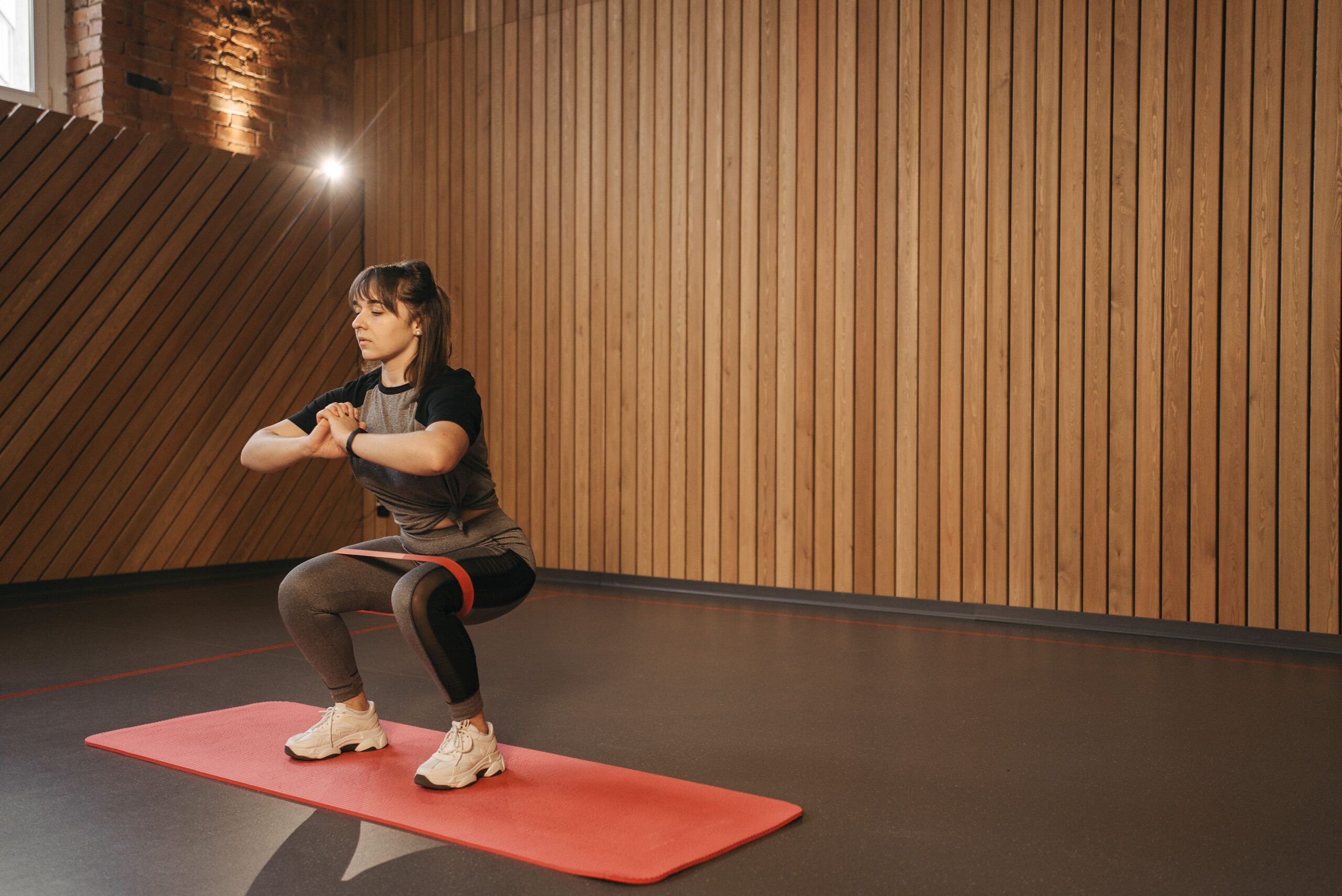
This is where a lot of people get stuck comparing themselves to whatever they see online. Here’s the honest answer: a 90 degree squat, where your thighs are roughly parallel to the floor, is a solid goal to aim for. It is not a requirement, and it’s definitely not where you need to start.
Depth should be earned through mobility and control, not forced. If your body isn’t ready to squat below parallel yet, that’s fine. Working toward that depth over time, without sacrificing your form to get there, is exactly the kind of progress that counts.
If you’re brand new to squatting, or coming back after time away, start even simpler with a sit to stand squat. Use a chair or a bench, sit all the way down, then stand back up. This builds the same movement pattern and strength without the pressure of chasing depth you’re not ready for yet.
The Cue That Changes Everything: Goblet Squats and Core Activation
Once you’re ready to add a little resistance, the goblet squat is one of the best tools for reinforcing good form while building real strength. Hold a dumbbell vertically at your chest, cupping one hand under the top of the weight and the other hand over it, and squat from there.
Here’s the piece most people skip: bring your elbows down and in, and actively push your fists into your palms as you hold the weight. This small adjustment creates noticeably more activation through your entire core, your abs, and even your lats and back muscles.
Try it both ways to feel the difference. Do a few reps with your arms relaxed, then do a few more with that active elbow and fist pressure. Most people notice the second version feels far more locked in and stable. That’s not an accident. Holding the weight this way forces your torso to stay upright and your core to genuinely brace, instead of just going through the motion of a squat without engaging much of anything.
This lines up with what most strength coaches point to as the real value of the goblet squat: the front-loaded position naturally encourages an upright torso, reduces strain on your lower back, and builds core stability, while also being one of the more mobility-friendly squat variations for people who are still building depth and control.
Why the Squat Matters More Than Just “Leg Day”
It’s easy to file squats under “lower body exercise” and move on. But the squat is one of the most foundational movements you can train, for life, athleticism, and general strength, not just your legs.
Done with intention, a proper squat builds:
- Lower body strength, obviously, through your quads, glutes, hamstrings, and calves
- Core strength, especially when you’re actively bracing through the movement instead of just repping through it
- A movement foundation that carries directly into other exercises like step-ups, lunges, and loaded carries
That last point matters more than people realize. Once you’ve built a solid, controlled squat pattern, a whole world of other functional exercises opens up. The squat isn’t just one exercise on a list, it’s often the foundation the rest of your training gets built on.
Quality Over Quantity
If there’s one shift I’d encourage anyone reading this to make, it’s this: be more intentional with every single squat, whether you’re using weight or not. It’s easy to rep through a set on autopilot. It’s a different thing entirely to feel each muscle actually working, brace your core on purpose, and control the movement instead of just surviving it.
There’s nothing wrong with a relaxed, lower-effort squat here and there. But if you want more out of your training, more strength, more stability, more carryover to real life, intentional reps will get you there faster than more reps ever will.
A Simple Way to Build Your Squat
If you’re putting this into practice, here’s a straightforward starting point:
- Set your stance. Feet just outside your hips, a slight turnout, adjusted based on what feels stable for you.
- Start where you are. Sit to stand squats if you’re new, bodyweight squats if you’re building confidence, goblet squats once you’re ready to add load.
- Aim for depth over time, using roughly 90 degrees as a goal, not a requirement on day one.
- Add the elbow and fist cue once you’re using a weight, to build real core activation instead of just going through the motion.
- Stay intentional. Fewer sloppy reps, more controlled, purposeful ones.
If you’re working through squats and something doesn’t feel right, or you just want a second set of eyes on your form, that’s exactly the kind of thing worth getting trained eyes on early rather than guessing for months. If you’re in Colorado Springs and want help building a squat, and a training plan, that actually fits your body, schedule a call with me and let’s take a look at where you’re starting from.
No Comments